Decluttering your home can feel like one of those projects that should be simple in theory but becomes exhausting the moment you begin. You look around, see too much stuff in too many places, and suddenly have no idea where to start. The good news is that clearing your home does not have to happen in one dramatic weekend. It works better when you follow a practical system, move in the right order, and build habits that keep the mess from returning. The source article centers on a three-part framework—simplify, organize, and systematize—along with a realistic timeline and a room-by-room approach.
The first step is to simplify. That means reducing what you own to the things you actually use, need, or enjoy. Decluttering is not just about tossing random items into donation bags. It is about making thoughtful decisions so your home supports your everyday life. Once you have removed the excess, the next step is to organize. Everything you keep should have a clear and logical place. Finally, you systematize the space by creating small routines and boundaries so it stays manageable over time. This is where many people struggle. They may clear a room once, but without a maintenance plan, clutter slowly rebuilds.
One reason decluttering feels so hard is that people often choose the wrong pace. A whole house does not need to be tackled all at once. A smaller home might be manageable over a month or two if you work steadily, but a larger family home may take several months or even a year. The better strategy is to choose a timeline that matches your real life, not your ideal life. If your schedule is packed, even fifteen or twenty minutes a day can move you forward. The goal is not speed. It is consistency. Momentum matters far more than perfection.
Where you begin also makes a difference. Some rooms deliver fast, visible results, while others take more emotional energy. Starting with quick-win spaces helps build confidence. Entryways and bathrooms are often easier because they are smaller and contain a lot of obvious clutter. Kitchens usually come next because they affect daily routines so heavily. If you have children, toys can be a major category to address early, since toy clutter often spills into living rooms and bedrooms. Closets, paper, and storage spaces are usually better saved for later, once you have already built some decluttering confidence.
As you work through your home, it helps to keep a few simple supplies nearby: trash bags, donation boxes, a recycling bin, a cleaning cloth, and a timer. The timer is especially useful because it prevents burnout. Decluttering feels less intimidating when you know you are only committing to a focused twenty-minute session instead of an endless afternoon. Small bursts of progress often lead to better decisions than marathon sessions fueled by frustration.
The entryway is one of the best places to begin because it affects the way your home feels the moment you walk in. Shoes, jackets, backpacks, keys, and mail can pile up quickly. The solution is not complicated: keep only what is currently in use, assign baskets or hooks by person or category, and reset the area every few days. Seasonal rotation also helps. If winter gear is crowding the space in spring, move it out. A calmer entryway can make the entire house feel more under control.
Bathrooms are another efficient starting point. These spaces tend to collect expired products, half-used bottles, and too many backups. Working by category makes the process easier. Group skincare, hair products, medicine, cleaning supplies, and travel items separately, then edit each group quickly. Once the excess is gone, store daily-use items together, keep countertops as clear as possible, and limit how much backup stock you keep on hand. A short nightly reset can prevent the room from becoming chaotic again.
The kitchen often has the biggest impact on daily life. When counters are crowded and cabinets are overfilled, cooking and cleanup feel harder than they should. Start small by clearing countertops and working through drawers, pantry shelves, and the refrigerator in short sessions. Let go of duplicate tools, expired food, and gadgets you rarely use. Then store items near where they are used. Keep prep tools near prep zones and lunch containers where they are easy to grab. The less visual clutter you keep in the kitchen, the easier it becomes to maintain. A nightly reset and weekly check of the fridge and pantry can make a huge difference.
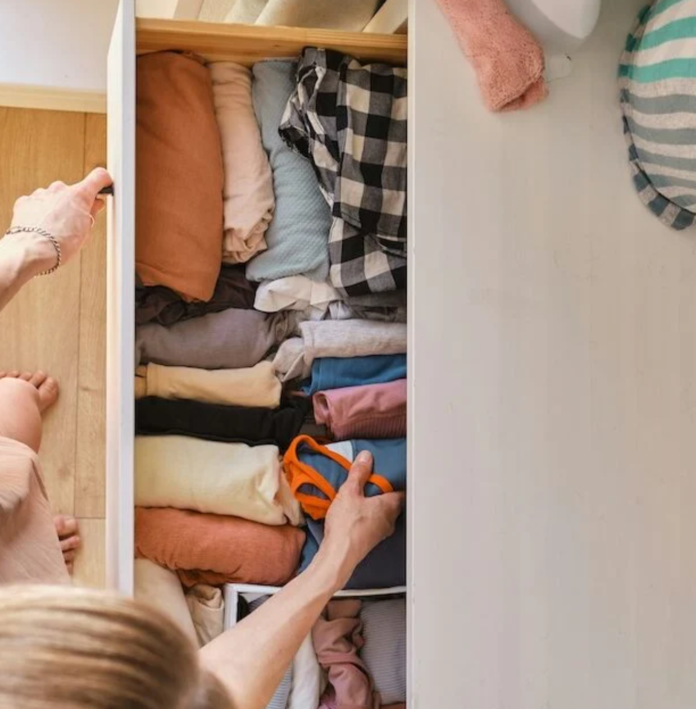
Closets are especially satisfying once you have some momentum. They are often full of clothes that no longer fit, no longer suit your lifestyle, or simply never get worn. A better closet begins with honesty. Keep the items you reach for regularly, not the ones you feel guilty about getting rid of. Reduce duplicates, move off-season pieces elsewhere, and organize what remains by category and visibility. Matching hangers, simple accessory storage, and a donation bag in the closet can make maintenance much easier. The source article also connects this area to capsule wardrobes and seasonal resets, which is one reason this section feels especially relevant to style-related content.
Bedrooms, laundry spaces, home offices, and storage zones follow the same principle: reduce what is unnecessary, assign homes to what remains, and create simple habits to protect the progress you have made. In bedrooms, clear surfaces and keep routines short. In laundry areas, limit supplies and avoid letting clean clothes pile up. With paper and office items, focus on visible surface clutter first and sort papers into simple action categories. In garages, attics, and basements, start with large items, break the area into zones, and save sentimental objects for the end.
At its core, decluttering is not about making your house look perfect. It is about making your home easier to live in. When you remove what is unnecessary, daily routines feel lighter. When everything has a place, your rooms become easier to use and easier to clean. And when you build small systems that fit your real life, clutter no longer feels like something that is constantly winning.

